
FROM THE CREATIONS ARCHIVE
Japan in Contrast
Tokyo, Kyoto, Nara, Ishigaki, and Hakone through private guiding, high-speed rail, tradition, food, and island landscapes.
Japan
01
Tokyo
The journey began with three days in Tokyo and a private guide who helped the travelers move through the city's different registers. A farmers market, neighborhood walks, regional food, and cultural interpretation gave the first days a human scale despite the size and speed of the capital.
Rather than treating Tokyo as a single visual idea, the itinerary used distinct districts and experiences to reveal its contrasts. Contemporary streets, careful ritual, informal food stops, and formal landmarks sat within the same program, creating a foundation for the wider journey through Japan.
02
Meiji Shrine and the Imperial Palace
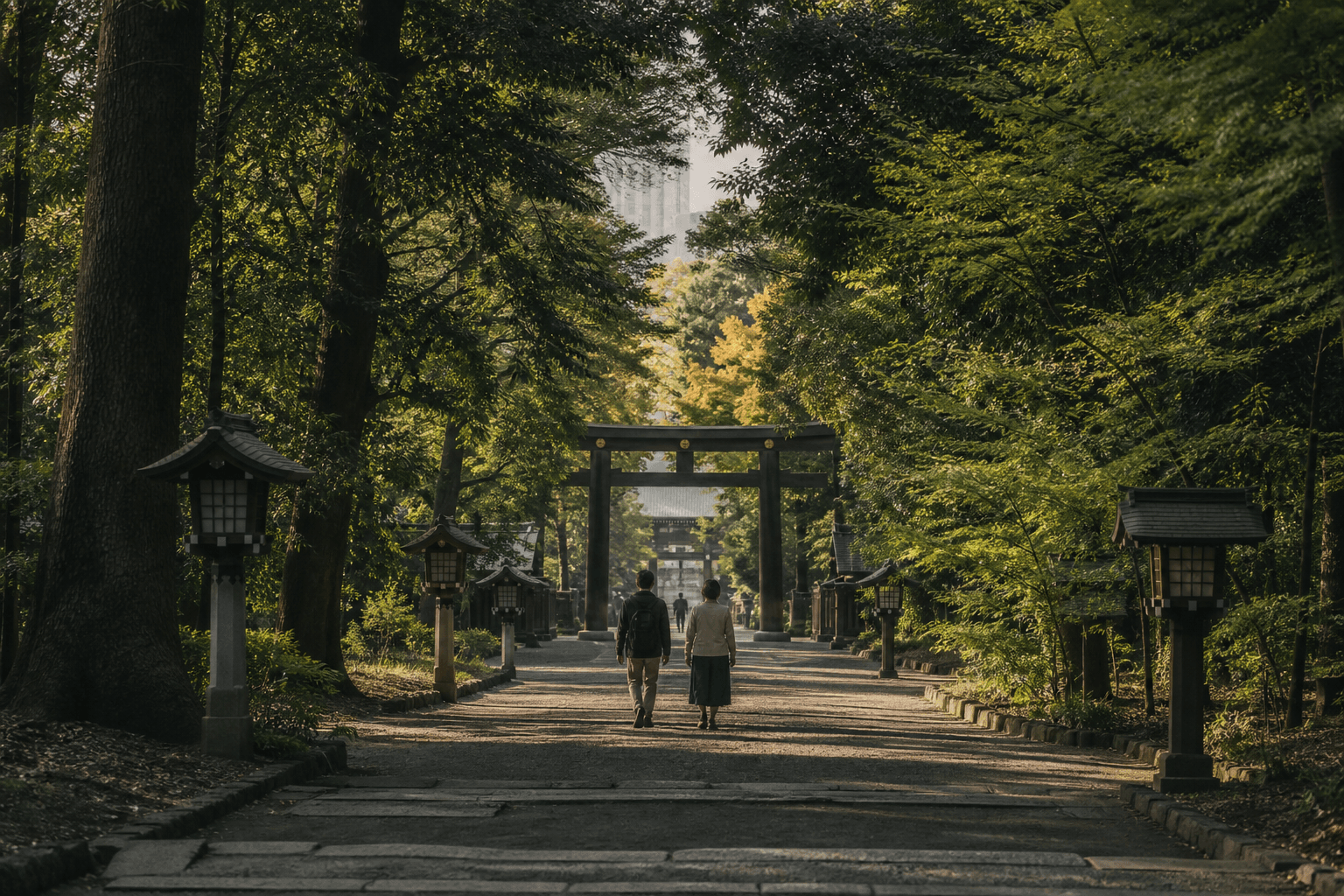
Meiji Shrine offered a quieter interval within the city. Its wooded approach and ceremonial spaces shifted attention away from traffic and commerce, while the guide supplied context for the site and the practices the travelers observed during their visit.
The Imperial Palace added another layer of history and civic meaning. Seen within the same day as modern Tokyo, it reinforced the journey's central contrast: institutions and traditions with deep continuity existing alongside one of the world's most dynamic contemporary cities.
03
Harajuku and the City's Contrasts
Harajuku changed the energy again. Fashion, youth culture, shopping, and the density of the streets created an immediate counterpoint to the shrine and palace. The itinerary did not smooth over these differences; it made moving between them part of the experience.
With a private guide managing timing and orientation, the travelers could engage with the district without reducing it to a quick visual stop. The day connected public culture, design, retail, and street life to the more formal cultural encounters that had preceded it.
04
Market, River, and Tea
A morning visit to the legacy Tsukiji fish market began with sushi for breakfast. The route then moved to the river, where a cruise carried the travelers toward one of Tokyo's oldest districts and offered a different view of the city's scale and development.
Traditional buildings, kimono, and a tea ceremony followed. Matcha was prepared within a setting focused on practice and attention, giving the day a deliberate progression from market activity to water, historic streets, and ritual. Each experience interpreted a different part of Tokyo rather than repeating a single theme.
05
Kyoto and Nara
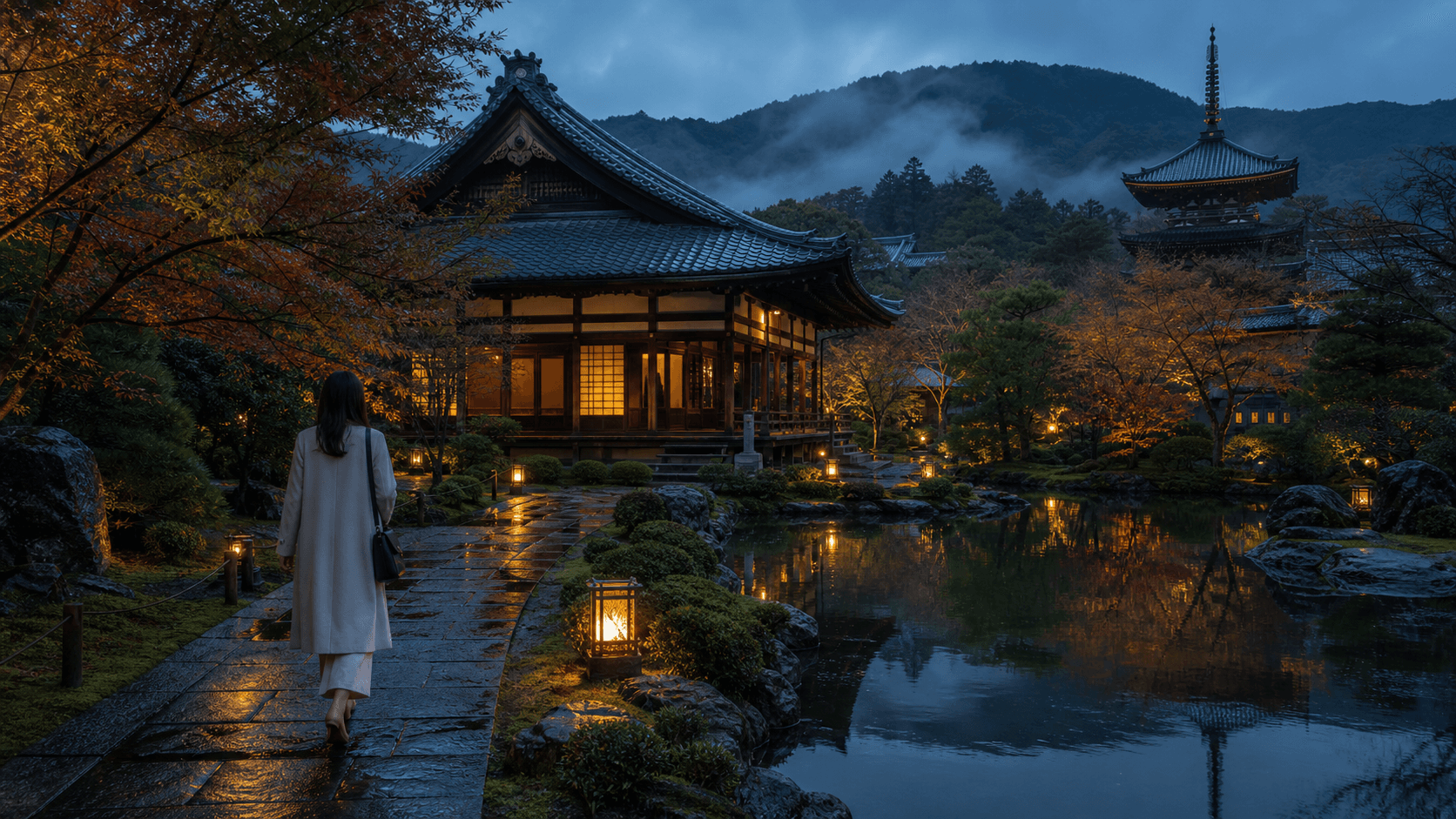
First-class high-speed rail carried the travelers from Tokyo to Kyoto. The change of city also changed the emphasis: natural and historical places, a more measured pace, and a retreat-style hotel where private outdoor soaking tubs created space for rest after guided days.
An excursion to Nara brought temples, shrines, and the deer park into the itinerary. Kyoto and Nara were not presented as static counterparts to modern Tokyo; they were experienced through active movement, interpretation, and the everyday settings surrounding their best-known cultural sites.
06
Ishigaki
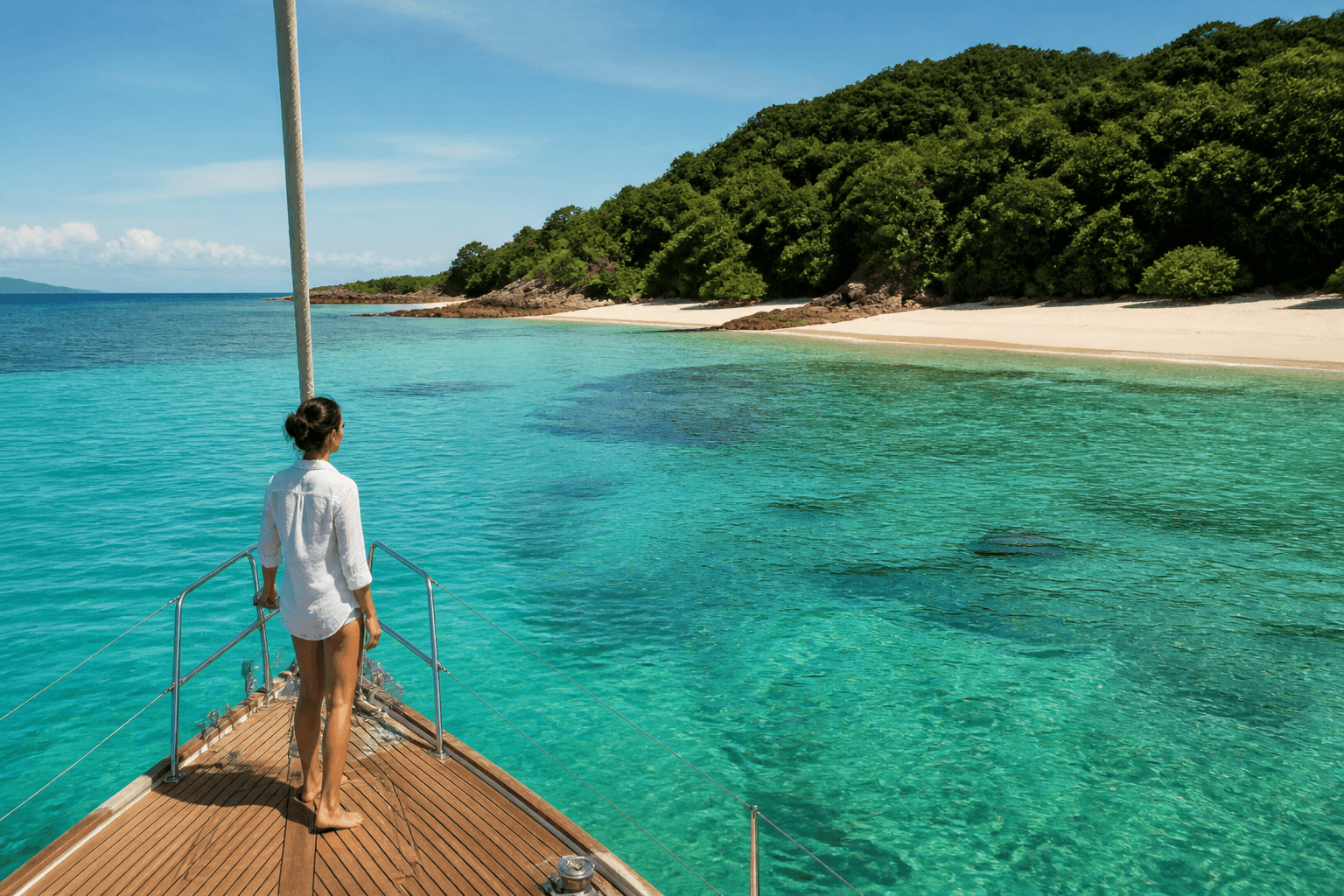
The next flight led south to Ishigaki. After the density of Tokyo and the cultural program in Kyoto and Nara, the island introduced several days organized around beach, sun, and water. The pause created contrast through climate as much as through activity.
Time on Ishigaki allowed the journey to breathe. It was not an incidental resort stop but a distinct geographic chapter, showing another Japanese landscape before the route returned to the mountains and volcanic terrain of the main island.
07
Hakone
Hakone formed the final regional stage. A gondola ascended Mount Komagatake, opening views across Lake Ashi and the surrounding mountains. The itinerary also followed a centuries-old cypress avenue, placing the travelers within a historic route as well as a dramatic natural setting.
A volcanic vent revealed another side of the landscape. The travelers encountered the area's black eggs, traditionally associated in local legend with seven added years of life. Framed as folklore rather than promise, the detail captured the way geology, custom, and storytelling met in Hakone before the return to Tokyo.
08
How Creations Brought the Journey Together
Creations coordinated private guiding in Tokyo, first-class high-speed rail, the Kyoto and Nara program, flights to and from Ishigaki, and the final movement through Hakone. The itinerary depended on precise connections between cities, islands, accommodations, and very different forms of daily travel.
That structure made contrast the journey's organizing idea rather than an accident: market and tea, Harajuku and shrine, rail and island, volcanic terrain and formal garden. With the transitions managed, the travelers could experience each place on its own terms while still feeling the logic of the whole route.